Dewey Book Tasting (Grades 3-5 Lesson)

Hello Everyone,

When my grades 3-5 classes were discussing New Year’s Resolutions, I shared mine: to read 10 non-fiction books from our library media center.

So, I thought students needed an introduction/refresher (depended on their background knowledge) to/of how non-fiction books are organized.

Hence, the “Dewey Book Tasting” Exploration!

After a student read our session’s “I Can” statement, I explained that non-fiction books have three-digit numbers that group them into large categories. It is important to know what numbers go with which topics, so you can find things in different libraries (like in middle school/high school or when you visit the public library).

Using my previously-assigned table groups, I had each table of students rotate to different tables to explore different broad groupings of non-fiction topics Each table was asked to list the topics they had in their book stacks and come up with a large topic name that each book topic could fit into. I chose books from the 500s, 600s, 700s, 900s, since students are mostly interested in science, technology, domesticated animals, activities, the arts, history and geography, and biographies.

Throughout the activity, students charted their findings and their rotations on one page; they were experiencing the Dewey Decimal System in action without the categorization being called that. For example, some groups came up with the large topic for a handful of 700s books being about “things to do,” while others mentioned “nature” as the topic for the 500 level books they had, mostly plant and wild animal books.

Adiós,

Ms. Tyler

Mandy (Goodreads Book Review)

Happy New Year Everyone!

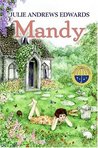
Below is my Goodreads review of Julie Andrews’ children’s novel Mandy. I’ve been intrigued by the idea of Julie Andrews writing for children and have wanted to read this story forever. I found a nice paperback copy at a local Half Price Books.

MandyMandy by Julie Andrews Edwards
My rating: 3 of 5 stars

It took quite a while for me to finish this book. Other books in digital format were more accessible for lunchtime reading, so I finally finished Mandy’s story during Winter Break.

Orphan Mandy longs for a home and family of her own. When she finds an abandoned cottage, she decides to commandeer it and starts “borrowing” household and gardening supplies to clean and maintain the cottage and the grounds. She makes friends with a bird and a deer who visit the cottage, while keeping the cottage a secret from the matron of the orphanage and her roommate.

Will Mandy get to keep working on the cottage? Will she ever find a family and true home?

Adiós,

Ms. Tyler

PS. Since Mexico is coming up as the school-wide culture at my school for the month of May, I thought I’d start brushing up on my Spanish, so my blog post signature will be this new one: a Spanish farewell and my name, with one of the bold fonts of this blog’s theme.

What To Do & Not Do: Library Rules

Hello Everyone,

A new school year means a new opportunity to discuss how we should and should not behave in the school library, especially since this is my first year in my new elementary school.

This week, K-5 students have been discussing appropriate and inappropriate Library behaviors. Take a look!


I think it’s interesting that this second grade class basically made a list of “don’t do” things, while this fifth grade class got really deep about things to do, like “check-out books to yourself only.”

After our discussions, students in grades 3 through 5 have acted out what we should or should not do, based on the item I assignment them from our class T charts. Some of my students have quite the dramatic flair!

Enthusiastically,

Ms. Tyler

R-E-S-P-E-C-T

Hello Everyone,

As another summer wraps up, I am finally settling into a new county in my state, having accepted an elementary library media specialist position in mid-July!

On one of my many applications for positions this summer, I was asked to discuss the most important element conducive to learning. I thought about many things and suddenly realized my five library rules all encompass different forms of respect. As I plan and get ready for a new year in a new place, I thought I’d share my thoughts on:

R-E-S-P-E-C-T!

(Is anyone else singing with the “inside my head voice?”)

Respect comes in various forms, namely respect of self, respect of authority, respect of peers, and respect for property. All four of these forms of respect are woven into my library media center rules. For learning to happen efficiently and effectively in any library media center, the librarian and students must have mutual respect for each other. This can be fostered by me valuing each student as an individual and getting to know his or her personal interests and outside activities. The students show respect for me by following directions and listening to me when I am conferring with them individually or conducting whole-group lessons. I help students practice respecting their peers by helping them learn to treat each other how they individually would like to be treated. I also discuss why it is important to speak kindly and how to whisper, that is use a Level 1 voice. Walking at all times encompasses respecting oneself as well as others, since some types of movement, such as running, hopping, or crawling, can cause injury to self or others. When a student runs in the library media center, he or she may run into a bookcase or accidentally push another student in an effort to stop. Lastly, respect for property is highlighted by my expectation that students to use care with library books, computers, and supplies. Especially with my younger elementary students, I discuss book care and focus on keeping library books readable for other students, by not coloring in them, keeping them away from food and pets, keeping them dry, and using a bookmark so as not to damage the spine or tear pages.

Enthusiastically,

Ms. Tyler


Crenshaw (Goodreads Book Review)

Hello Everyone,

I recently finished Katherine Applegate’s latest novel during lunch at school. Below is my review on Goodreads of Crenshaw.

CrenshawCrenshaw by Katherine Applegate
My rating: 3 of 5 stars

It’s heartbreaking for me to divulge I did not enjoy Crenshaw nearly as much as The One and Only Ivan. It was just depressing for me to read the worries Jackson faces as his family may be homeless again and how he struggles with telling his friend and his family the truth about he fears. I hated the dismal feeling I got, because this story is so like some children’s realities, and I didn’t connect with Crenshaw as a character, although he was wonderfully described. I would hesitate recommending this to Ivan lovers, as it is not, in my humble opinion, as fantastic.


Update: I know in my review I said I would hesitate recommending Crenshaw. However, some children need to see the life Jackson and his family leads so they can have hope for their own or a friend or family member’s situation. Keeping that in mind, Crenshaw is now listed on my “Consideration” file.

Enthusiastically,

Ms. Tyler

Use Statistics for Biographies

Hello Everyone,

For my advanced children’s literature class this summer, I delved into the use statistics for biographies at the elementary level. Below are my findings.

The elementary library media specialist from my practicum placement willingly ran a report in Follett Destiny of the top titles in the 92 section for this academic year.

Top 10 Titles for 2015-2016 Year

  1. Smile by Raina Telgemeier
  2. A Picture Book of Abraham Lincoln by David A. Adler
  3. Martin Luther King by Sande Smith
  4. Derrick Rose by Paul Hoblin
  5. A Picture Book of Martin Luther King, Jr. by David A. Adler
  6. Daniel Boone by Laurie Lawlor
  7. Helen Keller: From Tragedy to Triumph by Katherine E. Wilkie
  8. Michael Jordan: Basketball’s Soaring Star by Paul J. Deegan
  9. Abraham Lincoln by Peter Benoit
  10. Demi Lovato by Sarah Tieck

I was surprised Smile is the most checked-out title from the biography section. It is housed with the other graphic novels, since it is a graphic memoir, covering the “segment of…life” (as cited in Hintz & Tribunella, 2013, p. 281) of Raina getting braces during sixth grade. Students are heavily checking out this title because of its graphic novel status and their ability to relate with Raina’s experiences with braces and how her friends act differently towards her after she gets them. That the title is technically a memoir and therefore autobiographical has nothing to do with its rapid circulation, so it will be excluded from the succeeding discussion of biography circulation statistics.

With the exception of Derrick Rose, a basketball player, and Demi Lovato, a singer/songwriter, historically famous Americans are the topic students check out, with Abraham Lincoln and Martin Luther King, Jr. being the top two. Since the most common individuals researched include Helen Keller, Daniel Boone, Abraham Lincoln, and Martin Luther King, students have been assigned biography reports by their classroom teachers. The most checked-out author of the Top 10 is David Adler, who writes picturebook biographies of famous individuals. After examining some of his works, I find that his biographies appeal to elementary students because they provide basic information on the individuals with hand drawn illustrations. Because Kentucky history features prominently in upper elementary social studies curriculum, the inclusion of Daniel Boone is not surprising. I was, however, slightly surprised to see Helen Keller included in the Top 10. It is interesting that Derrick Rose and Demi Lovato made it into the Top 10 list, which shows students still use the library media center to satisfy personal information needs.

Enthusiastically,

Ms. Tyler

Reference

Hintz, C. & Tribunella, E. L. (2013). Reading children’s literature: A critical introduction. Boston, MA: Bedford/St. Martins.

R. J. Palacio’s Wonder: Mini-Book

Hello Everyone,

I recently made a mini-book for R. J. Palacio’s Wonder. The mini-book reviews the novel by detailing the plot, characters, setting, genre, themes, and includes my likes and dislikes, my postcard precept, and “think about it” questions for elementary students related to respecting others.

Check out the mini-book at http://tinyurl.com/wonderminibook!

Enthusiastically,

Ms. Tyler

P.S. A “how-to” screencast on making mini-books with Microsoft Publisher is forthcoming!

LME 590 Practicum Week 11

Hello Everyone,

As a way to reflect on my entire two months and a day of Practicum experiences and to satisfy a LME 590 Portfolio requirement, I have created a digital storytelling presentation using Windows Movie Maker and Audacity. The video highlights various activities in which I have engaged during my time at my elementary school library media center placement and includes footage of my teaching a fifth grade lesson on genre. On YouTube, the video is available at https://www.youtube.com/watch?v=ZxKCrkjSyNM.

Enthusiastically,

Ms. Tyler

LME 590 Practicum Week 10

Hello Everyone,

Since I have finished accumulating and documenting my 120 Practicum hours, having a total of 135 hours, I have chosen to make my last LME 590 Journal entry a reflection on the following CEBS Dispositions.

Values collaboration. Actively seeks out and incorporates ideas of others. Takes leadership in working with others to improve the overall environment. Regularly share information and ideas.

One way through which I have become able to seek out the ideas of others and regularly share information and ideas has been through membership in the Kentucky Library Media Specialists Listserv. The KYLMS Listserv acts like a giant contact list, through which I can connect with library media specialists in different levels of public and private schools across the state, as well as library media education students and district-level administrators. My growing involvement started with the search of what to do with discarded non-fiction books since I was becoming responsible for weeding the non-fiction collection of my Placement library media center. The Kentucky Department of Education Library Media/Textbook Consultant encouraged me to reach out to the KYLMS Listserv, since she did not have such a list, so I subscribed to the Listserv and sent my first post on January 19. I was surprised at the rapid and voluminous response my post received. Library media specialists from elementary, middle, and high schools in both public and parochial settings from across the state contributed suggestions and ideas to help with this project, including the 2014-2015 President of AASL. Mostly, they voiced five options for the old non-fiction books: throw them away, recycle them, sell them, give them to teachers and students, donate them, or repurpose them through art projects. I thanked each respondent personally with an appropriate comment about the advice he or she had offered. Overall, thirty-one emails were exchanged over this topic of weeding non-fiction books.

In addition to receiving advice about the weeding of the non-fiction section, I also contribute to the sharing of knowledge as I am able, by providing lesson resources and help with facilitating access to information resources. For example, I offered one library media specialist looking for a genre assessment a modified version of the “Genre Bingo” activity I am implementing as a reading promotion activity at my Practicum placement for students in third through fifth grade. After creating a video to guide viewers through using the WWWDOT criteria to evaluation two different websites, I sent the link out to my YouTube video to the Listserv members, making the video available at https://www.youtube.com/watch?v=GEk2mm_4UOU. One middle school library media specialist responded that she would love to look at the video, yet the link was not working for her. I made another version of the link using TinyURL, and she was able to access the video. I also replied to the request of the librarian at the Kentucky School for the Deaf asking for a genre presentation by giving her a PowerPoint presentation I made explaining “genre” and the basic characteristics of nine genres and a link to a video I created using the PowerPoint presentation to use in a lesson with fifth grade students at my Practicum placement. To further facilitating access to information resources, I also posted a modified version of the help sheet I created for searching a Destiny library OPAC using either Accelerated Reader score ranges or Lexile levels for the library media specialists to use with or give to their patrons. It was a pleasant surprise to have a LME classmate respond to that post, as well as two library media specialists.

Values professionalism: Respect for school rules, policies, and norms. Knows school rules and policies. Follows them consistently. Understands the purpose of regulations and respects their intent. Accepts responsibility for personally following them in patterns of dress, behavior, etc. EPSB Code of Ethics.

My understanding of the purpose of and respect for school rules, policies, and norms is evident through my consistent following of the rules, policies, and norms, especially modeling appropriate behavior and monitoring student behavior during security and severe weather drills. One Friday morning, the school engaged in both a lock-down drill and a tornado drill, minutes apart from each other. I helped enforce the expectations of the drills and modeled appropriate behavior by moving quickly to designated areas for each drill and ensuring silence among students. Every day at Practicum my professionalism is demonstrated through my responsibility to adhere to a professional dress code, with the slight exception of the hat, gloves, bow tie, furry tummy, and tail I added to an appropriate black turtleneck shirt and black dress pants when I was attired as the Cat in the Hat on “Read Across America Day.” Even my dressing as the Cat on that day was in accordance with the school norm of dressing as a storybook character in observance of what would have been Dr. Seuss’ birthday.

Values professionalism: Commitment to self-reflection and growth. Recognizes personal limitations and strengths and uses them to best professional advantage. Actively seeks suggestions and constructive criticism. Regularly practices critical thinking. Regularly engages in learning through self-reflection.

My personal choice to read 7 Keys to Comprehension by Susan Zimmerman and Chryse Hutchins and use as a launching pad for collaboration with the classroom teachers at my Practicum placement is a demonstration of this CEBS Disposition. I recognized my personal limitations in understanding the details of reading comprehension and used it to the best professional advantage by asking the classroom teachers which resources, if any, I could offer them about reading comprehension. When the results of the survey showed picture book lists would be helpful, I was armed with knowledge about the different strategies from 7 Keys to be able to effectively compile appropriate lists and cross-reference them.

Enthusiastically,

Ms. Tyler

LME 590 Practicum Week 9: Part 2

Hello Everyone,

It was bittersweet for my last day of Practicum to be the school–wide celebration of “Read Across America Day” on March 2nd. I was finally able to reveal the correct answers to my bulletin board display, which was exciting since the library media specialist said a couple of the students had told her they knew who the “twins” where, which I took to mean they knew the silhouettes of Thing 1 and Thing 2.

seuss2

To make it possible for each Special Area teacher to celebrate what would have been Dr. Seuss’s birthday with all the students in the school, each Special Area teacher had an activity station in the school gym through which students rotated in grade-level groups. At the library station, each student received a paperback book and colored a Dr. Seuss bookmark. At the P. E. station, students participated in a Green Eggs and Ham relay obstacle course.  At the science station, students participated in a One Fish, Two Fish, Red Fish, Blue Fish chemical reactions activity. At the Art/Music station, students practiced singing of the “Green Eggs and Ham” song from Seussical the Musical. This particular “No Color Day,” where every class goes to the gym at their grade-level’s Special Area time, was at the request of the library media specialist, so each student could celebrate Dr. Seuss’ birthday on the actual day, rather than her celebrating “Read Across America Day” with only the Wednesday group of students and having to carry over the activities deeper into March and April, when it would no longer be relevant. After assisting with the library station for a few classes, I became responsible for the science station. It was also determined that the school would encourage faculty, staff, and students to dress as their favorite storybook characters, so I spent the day dressed as the Cat in the Hat.

cat

A reporter from the local newspaper visited the school that day, and I spoke briefly with him about “Read Across America Day” being a way to honor the life and work of Dr. Seuss, highlighting that the school was celebrating by dressing as book characters and that the library media center, specifically, was giving away free books of various types and topics by different authors and Seuss-related bookmarks to the students, so each child would have his or her own book. Almost two weeks later, my photograph made it into the slideshow posted on the newspaper’s website, showing how different schools across the district were celebrating “Read Across America Week!” It was fantastic to get to represent “my” library in the media.

cat2

Enthusiastically,

Ms. Tyler