Goodreads Review: The Butterfly Lion

Hello Everyone,

I randomly picked up a copy of The Butterfly Lion, and reviewed the title on Goodreads. Below are my thoughts.

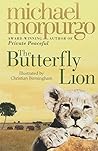
The Butterfly LionThe Butterfly Lion by Michael Morpurgo
My rating: 3 of 5 stars

The back cover intrigued me to find out why a boy would promise to always remember a lion. There are actually two boys in the story. A nameless narrator runs away from his boarding school in England and seeks shelter from the rain in the home of an elderly lady. She fascinates him with the story of her childhood friend Bertie who was raised in Africa and adopted a white lion cub, only to have him sold to a circus before Bertie leaves for boarding school. The girl and Bertie exchange letters as they grow up and eventually marry after World War 1. Does Bertie ever find his white lion?

Note: it seems the author is the nameless narrator, since he is addressed at the end of the book by his last name. The explanation of what happened to the elderly lady was very strange for me, as it seemed like the boy was conversing with a ghost. The ending was also a little weird in that he was hearing their voices tell him to take care of the sculpture. Overall, a pretty good historical read, with some potential fantasy thrown it. Some mention of adults drinking, and slight graphic depictions of war. It would be a fine recommendation for upper elementary and middle school wanting a fast read. I think I’ll investigate more from this author.

Happy reading!

Ms. Tyler

Mandy (Goodreads Book Review)

Happy New Year Everyone!

Below is my Goodreads review of Julie Andrews’ children’s novel Mandy. I’ve been intrigued by the idea of Julie Andrews writing for children and have wanted to read this story forever. I found a nice paperback copy at a local Half Price Books.

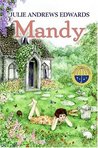
MandyMandy by Julie Andrews Edwards
My rating: 3 of 5 stars

It took quite a while for me to finish this book. Other books in digital format were more accessible for lunchtime reading, so I finally finished Mandy’s story during Winter Break.

Orphan Mandy longs for a home and family of her own. When she finds an abandoned cottage, she decides to commandeer it and starts “borrowing” household and gardening supplies to clean and maintain the cottage and the grounds. She makes friends with a bird and a deer who visit the cottage, while keeping the cottage a secret from the matron of the orphanage and her roommate.

Will Mandy get to keep working on the cottage? Will she ever find a family and true home?

Adiós,

Ms. Tyler

PS. Since Mexico is coming up as the school-wide culture at my school for the month of May, I thought I’d start brushing up on my Spanish, so my blog post signature will be this new one: a Spanish farewell and my name, with one of the bold fonts of this blog’s theme.

Crenshaw (Goodreads Book Review)

Hello Everyone,

I recently finished Katherine Applegate’s latest novel during lunch at school. Below is my review on Goodreads of Crenshaw.

CrenshawCrenshaw by Katherine Applegate
My rating: 3 of 5 stars

It’s heartbreaking for me to divulge I did not enjoy Crenshaw nearly as much as The One and Only Ivan. It was just depressing for me to read the worries Jackson faces as his family may be homeless again and how he struggles with telling his friend and his family the truth about he fears. I hated the dismal feeling I got, because this story is so like some children’s realities, and I didn’t connect with Crenshaw as a character, although he was wonderfully described. I would hesitate recommending this to Ivan lovers, as it is not, in my humble opinion, as fantastic.


Update: I know in my review I said I would hesitate recommending Crenshaw. However, some children need to see the life Jackson and his family leads so they can have hope for their own or a friend or family member’s situation. Keeping that in mind, Crenshaw is now listed on my “Consideration” file.

Enthusiastically,

Ms. Tyler

Ballet Shoes (Goodreads Book Review)

Hello Everyone,

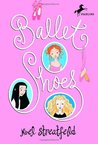
At a Half Price Books outlet, I picked up a fantastic copy of Ballet Shoes, something I’ve wanted to read for a long time. Below is my Goodreads review.

Ballet Shoes (Shoes, #1)Ballet Shoes by Noel Streatfeild
My rating: 5 of 5 stars

Pauline, Petrova, and Posy Fossil have all been brought home to London from various spots and with varying rescue stories to live with Sylvia and Nana by Sylvia’s Great-Uncle Matthew, known commonly by the acronym “Gum.” They vow on each other’s birthdays to try to get the name of Fossil into history books because it is their very own and not from their grandfathers. Each girl trains at an academy for ballet and theatre, because Sylvia is running out of the money left her by Gum for their upkeep, while four borders are taken in to help with expenses until the girls can work. At the age of twelve, both Pauline and Petrova start performing on the stage in different productions, one of which is Shakespeare’s A Midsummer’s Night Dream. Pauline adore the theatre, while Petrova does not; she’d rather help one of the borders in his garage or earn her pilot’s license. Posy, however, surpasses them all in dancing and longs to finally wear the pair of ballet shoes left her by her mother, when Gum loosely adopted her. Throughout the book, readers wonder if Gum will ever make another appearance with or without another “fossil.” I enjoyed following each girl through her training and seeing how each makes her way in the world of theatre. The short passage preceding my copy of the story gives what happened to the girls, yet it was still wonderful to journey with them through ballet classes, French lessons, applying for working licenses, and the jitters of auditions, as well as learn lessons in pride and humility. Overall, it was a charming read, similar to Anne of Green Gables and Ginger Pye.

Enthusiastically,

Ms. Tyler

Yours Truly (Goodreads Book Review)

Hello Everyone,

Happy New Year! I finally get to find out more about Truly Lovejoy and her family and friends in Yours Truly. Below is my Goodreads review of this Pumpkin Falls mystery.

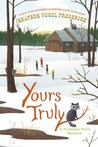
Yours Truly (Pumpkin Falls Mystery, #2)Yours Truly by Heather Vogel Frederick
My rating: 4 of 5 stars

After completely falling in love with Truly and her family and friends in Pumpkin Falls, I eagerly awaiting getting the sequel from the library. I must say it did not equal Absolutely Truly in its charm. Truly is excited her cousin is coming for Spring Break, yet becomes jealous of her as she seems to outshine her with her friends and family. The mystery of the maple sap lines being sabotaged does not hold a candle to who are “B” and “B” and what do the cryptic notes mean in addition to who stole the signed copy of Charlotte’s Web from the first story. I did enjoy seeing the Lovejoy father be much more as Truly described he was before Black Monday, which shows people adapt and thrive over time having endured trauma. The Underground Railroad tie to Pumpkin Falls was pretty interesting, as well as the discovers in the house and graveyard. Overall, if a reader has gobbled up the first installment, I would recommend he or she keep the story going with this volume.

Enthusiastically,

Ms. Tyler

Wonderstruck (Goodreads Book Review)

Hello Everyone,

Recently, I have finally been able to read a Brian Selznick novel! After all of the exposure The Invention of Hugo Cabret received by shocking the library community with winning the 2008 Caldecott award, I had intended to read it, yet Wonderstruck was available first at my public library. Wonderstruck has been my reward for completing the coursework for my Master of Science in Library Media Education. Below is my Goodreads review.

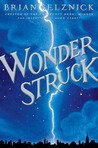
WonderstruckWonderstruck by Brian Selznick
My rating: 5 of 5 stars

Intrigued by Brian Selznick’s style of format-twisting, I was ecstatic to finally read Wonderstruck. This novel alternates between two common formats to tell the stories of two children who grow up 50 years apart. Instead of using words and pictures to work together to tell the two stories, Selznick uses only words to tell the story of Ben in 1977 and only pictures to tell the story of Rose in 1927. Both children are deaf. Ben’s house gets hit by lightning, and he loses the hearing in his good ear, while Rose may have been born deaf. Each child travels to New York City in search of a parent and finds friendship and love. The stories intertwine in a remarkable way. There is discussion and examples of finger-spelling with mention of sign language as two means for deaf people to communicate.

Enthusiastically,

Ms. Tyler

Use Statistics for Biographies

Hello Everyone,

For my advanced children’s literature class this summer, I delved into the use statistics for biographies at the elementary level. Below are my findings.

The elementary library media specialist from my practicum placement willingly ran a report in Follett Destiny of the top titles in the 92 section for this academic year.

Top 10 Titles for 2015-2016 Year

  1. Smile by Raina Telgemeier
  2. A Picture Book of Abraham Lincoln by David A. Adler
  3. Martin Luther King by Sande Smith
  4. Derrick Rose by Paul Hoblin
  5. A Picture Book of Martin Luther King, Jr. by David A. Adler
  6. Daniel Boone by Laurie Lawlor
  7. Helen Keller: From Tragedy to Triumph by Katherine E. Wilkie
  8. Michael Jordan: Basketball’s Soaring Star by Paul J. Deegan
  9. Abraham Lincoln by Peter Benoit
  10. Demi Lovato by Sarah Tieck

I was surprised Smile is the most checked-out title from the biography section. It is housed with the other graphic novels, since it is a graphic memoir, covering the “segment of…life” (as cited in Hintz & Tribunella, 2013, p. 281) of Raina getting braces during sixth grade. Students are heavily checking out this title because of its graphic novel status and their ability to relate with Raina’s experiences with braces and how her friends act differently towards her after she gets them. That the title is technically a memoir and therefore autobiographical has nothing to do with its rapid circulation, so it will be excluded from the succeeding discussion of biography circulation statistics.

With the exception of Derrick Rose, a basketball player, and Demi Lovato, a singer/songwriter, historically famous Americans are the topic students check out, with Abraham Lincoln and Martin Luther King, Jr. being the top two. Since the most common individuals researched include Helen Keller, Daniel Boone, Abraham Lincoln, and Martin Luther King, students have been assigned biography reports by their classroom teachers. The most checked-out author of the Top 10 is David Adler, who writes picturebook biographies of famous individuals. After examining some of his works, I find that his biographies appeal to elementary students because they provide basic information on the individuals with hand drawn illustrations. Because Kentucky history features prominently in upper elementary social studies curriculum, the inclusion of Daniel Boone is not surprising. I was, however, slightly surprised to see Helen Keller included in the Top 10. It is interesting that Derrick Rose and Demi Lovato made it into the Top 10 list, which shows students still use the library media center to satisfy personal information needs.

Enthusiastically,

Ms. Tyler

Reference

Hintz, C. & Tribunella, E. L. (2013). Reading children’s literature: A critical introduction. Boston, MA: Bedford/St. Martins.

Graphic Novels

Hello Everyone,

For my advanced children’s literature class this summer, I discussed with my classmates the importance and use of graphic novels in elementary library media centers. Below is my reflection on the topic.

Graphic novels, defined by Wiener as “book-length comic books that are meant to be read as one story” (as cited in Hintz & Tribunella, 2013, p. 178), are most definitely crossover works when considered as an entire literary format or genre. Some titles, when examined as a whole works, are more appropriate to select age groups based on their content and use of language. For example, Marjane Satrapi’s graphic novel Persepolis does detail her childhood in Iran, as Hintz and Tribunella mentioned (p. 178), but, personally speaking, would not be appropriate for elementary students due to detailed and somewhat explicit depictions of college and adult life as Marjane matures. I base my opinion of the suitability of Persepolis as at least a high school graphic novel on my having read the entire work in my undergraduate young adult literature course. There are numerous fiction and nonfiction graphic novels intended or appropriate for elementary students, such as Jennifer L. Holm’s Babymouse: Beach Babe, the third installment in the popular the Babymouse series, and the graphic novel biography of Elizabeth Cady Stanton, part of the Graphic Library series. Both titles I have read and reviewed on Goodreads.

I regularly observe students, both boys and girls, checking graphic novels out of elementary library media centers. Jeff Smith’s BONE series is wildly popular, as well as Raina Telgemeier’s Sisters and its sequel Smile. To aid in selection of graphic novels for different age groups, the Association of Library Service to Children (ALSC) have compiled the 2016 updated reading lists for kindergarten through second grade, third through fifth grade, and sixth through eighth grade, available here. I was excited to see several of the K-2 appropriate graphic novels listed were published by TOON Books, the same company to publish Jeff Smith’s Little Mouse Gets Ready, so some of ALSC’s K-2 graphic novel recommendations might be available as YouTube video read-alouds. Several of the titles ALSC recommends, such as Blinky: The Right to Scratch (K-2) and Lost in NYC: A Subway Adventure (3-5), are going on my professional to-read list, as I feel graphic novels are increasingly important to children’s literature. With their text brevity, making them similar to novels in verse, and their vibrant, often full-color illustrations, making them similar to picturebooks, graphic novels support reluctant readers, as well as students learning English as their second language, becoming interested in books.

Enthusiastically,

Ms. Tyler

Reference

Hintz, C. & Tribunella, E. L. (2013). Reading children’s literature: A critical introduction. Boston, MA: Bedford/St. Martins.

Popular Contemporary Poets

Hello Everyone,

In my advanced children’s literature class this summer, I was required to research the popular contemporary children’s poets. Below are my findings.

After canvassing an elementary library media specialist and some third grade students, I found Shel Silverstein to be the most widely read and enjoyed contemporary poet at the elementary school level. The library media special did say poetry is not heavily checked out by the students  in her school, yet, when it is, Silverstein’s works are the ones that are used by the students. Where the Sidewalk Ends was the favorite of the third grade students I spoke with, after I listed some poets they maybe had experienced. When I first asked them who were their favorite poets, they promptly replied that they didn’t know any. Once I gave them a list of Shel Silverstein, Jack Prelutsky, and Bill Martin, Jr, Silverstein was their favorite. I have a slight previous connection with Silverstein’s works; my fourth grade student teaching mentor gave me a copy of Where the Sidewalk Ends with the signatures of the students inside the front cover, saying it is often a favorite among the older elementary students.

From examining several poems in Where the Sidewalk Ends: The Poems and Drawings of Shel Silverstein, I find myself laughing readily at the twists and small jokes within some of the individual poems, such as “My Rules” being a child’s marriage proposal with a funny answer (p. 74), and the general silliness of others, such as “The Hat,” in which a plunger is mistaken for a hat (p. 74). I was especially delighted to stumble across “Sick” among the pages, since it has always been one of my favorite poems from childhood, containing the elaborate excuses of a little girl as to why she cannot go to school, only to discover it is Saturday (p. 58-59). I almost memorized the entire poem as a child and never could remember the author, since I read it in a general child’s poetry anthology. Even though I have no siblings, I empathize with the annoyance of the speaker trying to sell his or her younger sister in “For Sale” (p. 52). Overall, Shel Silverstein has accomplished the feat of writing poetry for children than encompasses all the attitudes, feelings, and experiences of children; he “[explores] the tensions children might feel at home or school” and “probes the fault lines between self and other” (Hintz & Tribunella, 2013, p. 101). Knowing now that Shel Silverstein is the author of “Sick,” I love his poems even more than I had having recently grown in my appreciation of his work as a future librarian.

Enthusiastically,

Ms. Tyler

References

Hintz, C. & Tribunella, E. L. (2013). Reading children’s literature: A critical introduction. Boston, MA: Bedford/St. Martins.

Silverstein, S. (2014). Where the sidewalk ends: The poems & drawings of Shel Silverstein (40th anniversary edition). New York, NY: HarperCollins Publishers.

Multicultural Cinderella Stories

Hello Everyone,

For my advanced children’s literature class this summer, I was required to research a topic in children’s literature and chose multicultural “Cinderella” stories. Below is my essay.

Often presented in picture book format, variations of “Cinderella” span continents, “countries,” communities, and “times” (Alexander & Morton, 2007, p. 35), each adapting through character names and descriptions, plot elements, and illustrations to mirror the norms, dress, occupations, habits, and, sometimes, the languages and dialects of their locations. These variants are “likely the result of continued cultural and literary exchange between countries” or “might have arisen because people in different cultures confront similar challenges in human life, such as sibling rivalry, scarcity, and oppression” (Hintz & Tribunella, 2013, p. 130). Regardless of the reason for cultural variation, “Cinderella” from any region of the world remains one of the most well-known and re-told tale from among the collection of stories commonly known as the “classic fairy tale cannon” (Hintz & Tribunella, p. 135).

Reportedly originating in China during the ninth century, the basic “Cinderella” story most often includes elements considered fundamental to the tale, such as “an evil stepmother and stepsister(s), a dead mother, a dead or ineffective father, some sort of gathering such as a ball or festival, mutual attraction with a person of high status, a lost article, and a search that ends with success” (Northup, 2000, para. 2). Non-European young women fitting the conventional “Cinderella model” are presented in children’s literature in such settings as the Smoky Mountains (Schroeder, 1997), Mexico (dePaola, 2002; Coburn, 2000), Africa (Steptoe, 1987),  an island in the Caribbean Sea (San Souci, 1998), a village near Lake Ontario (Martin,1992), a pueblo village (Pollock, 1996), Poland (Jaffe, 1998), southern China (Louie, 1982), Japan (Schroeder, 1994), and a fishing town in the Middle East (Hickcox, 1998). Although most “Cinderella” characters receive assistance with appropriate clothing, some get that aid from helpers significantly dissimilar to the European “fairy godmother,” such as a dead or live fish (Louie, 1982; Hickcox, 1998), a magic stick either the “Cinderella” or her human godmother possesses (Jaffe, 1998; San Souci, 1998), turkeys (Pollock, 1996), and a magical, talking hog (Schroeder, 1997). The eventful gatherings of a few variations differ from the traditional concept, such as Maha from the Middle Eastern version attending the henna of a bride (Hickcox, 1998), while Nyasha from the African tale is among the Most Worthy and Beautiful Daughters of the Land invited by the Great King to appear before him (Steptoe, 1987).

Although most conventional “Cinderella” story elements are common among several cultural variations, it is important to examine some notable exceptions. Some versions do not contain a special event where the “Cinderella” meets her future spouse; for example, the Japanese “Cinderella,” Lily, is quietly courted by the son of her adopted parents and made to undergo a test before they can marry (Schroeder, 1994). As an example of the differences in paternal effectiveness or absence across versions, Mireleh, the Jewish “Cinderella,” is actually driven away by her father, a rabbi, for saying she loves him the way meat loves salt (Jaffe, 1998). Refuting the trend that most “Cinderellas” are mutually attracted to individual persons of high status, the Turkey Girl dances among the proud maidens and handsome braves without being singled out by one particular brave (Pollock, 1996), and the Zuni tale is one of a few versions across cultures that notably excludes any search by an influential individual for the “Cinderella” (Pollock, 1996). Additionally, one particular story contradicts “Cinderellas” losing personally identifiable and traceable articles, usually shoes; Adelita from one of the Mexican versions is found by her hanging the shawl she wore at the fiesta out a window (dePaola, 2002).

Starting in the late twentieth century, the general character of “Cinderella” has become commonly regarded as “simpering, whimpering… [and] helpless,” yet examination of the character type through the multicultural versions of the fairy tale reveal the earlier “Cinderella” to be “self-reliant, devoted to family and ancestors, and willing to make her own future” (Northup, para. 4). For example, both girls from the Native American “Cinderella” versions are self-reliance. The Rough-Face Girl uses leftover items and natural materials to make her clothes before meeting with the sister of the Invisible Being (Martin, 1992); the Turkey Girl lives alone in a mud-walled hut, herding the turkeys of wealthy families (Pollock, 1996). Devotion to family is apparent in the African tale and one of the Mexican versions. Nyasha from Africa is too considerate of her father’s feelings to complain of her mistreatment from her sister (Steptoe, 1987), while Domitila from one of the Mexican versions never forgets her mother’s commands about completing tasks with care and love (Coburn, 2000); willing to make her own way, Adelita from the other Mexican version hangs her shawl out the window for the young man to see (dePaola, 2002). Similarly, Domitila and the Turkey Girl are the only two “Cinderellas” to work for wages. Domitila becomes a cook in the governor’s house at her father’s urging (Coburn, 2000) and the Turkey Girl is paid in corn and cast-off clothing (Pollock, 1996).

Enthusiastically,

Ms. Tyler

References

Alexander, L. B. & Morton, M. L. (2007). Multicultural Cinderella: a collaborative project in an elementary school. School Libraries Worldwide, 13(2), 32-45.

Coburn, J. R. (2000). Domitila: A Cinderella tale from the Mexican tradition. Auburn, CA: Shen’s Books.

dePaola, T. (2002). Adelita: A Mexican Cinderella story. New York, NY: G.P. Putnam’s Sons.

Hickox, R. (1998). The golden sandal: A middle Eastern Cinderella story. New York, NY: Holiday House.

Hintz, C. & Tribunella, E. L. (2013). Reading children’s literature: A critical introduction. Boston, MA: Bedford/St. Martins.

Jaffe, N. (1998). The way meat loves salt: A Cinderella tale from the Jewish tradition. New York, NY: Holt.

Louie, A.-L. (1982). Yeh-Shen: A Cinderella story from China. New York, NY: Philomel Books.

Martin, R. (1992). The rough-face girl. New York, NY: G.P. Putnam’s Sons.

Northup, M. (2000). Multicultural Cinderella stories. Book Links, 9(5). Retrieved from http://www.ala.org/offices/resources/multicultural

Pollock, P. (1995). The turkey girl: A Zuni Cinderella story. Boston, MA: Little, Brown and Company.

San Souci, R. D. (1998). Cendrillon: A Caribbean Cinderella. New York, NY: Simon & Schuster Books for Young Readers.

Schroeder, A. (1994). Lily and the wooden bowl. New York, NY: Doubleday Book for Young Readers.

Schroeder, A. (1997). Smoky mountain rose: An Appalachian Cinderella. New York, NY: Dial Books for Young Readers.

Steptoe, J. (1987). Mufaro’s beautiful daughters: An African tale. New York, NY: Lothrop, Lee & Shepard Books.